
Where the China Mass Spectrometry Society (CMSS) was founded: 
The CMSS (http://www.cmss.org.cn/) was established on September 22, 1980, in Hangzhou, Zhejiang Province, providing a rich historical context and academic environment for hosting the International Mass Spectrometry Conference in Hangzhou. The inaugural meeting, held as the Mass Spectrometry Branch of the Chinese Physical Society, saw participation from 136 institutions and 147 representatives. The conference adopted the "Charter of the Mass Spectrometry Branch of the Chinese Physical Society" and elected its first council, with Qinglian Zhang being named the inaugural president of the society. This marked the beginning of a new historical era for mass spectrometry development in China. The society conducts a general assembly every four years, a national academic exchange conference every two years, and annual meetings of various professional committees in odd numbered years. In response to recent advancements in mass spectrometry and the expansion of interdisciplinary fields, the council has restructured the society into five specialized committees: Inorganic Mass Spectrometry, Organic Mass Spectrometry, Biomedical Mass Spectrometry, Isotope Mass Spectrometry, and Mass Spectrometry Instruments and Education. 


   Zhejiang University, a prestigious institution of higher education, boasts a long history and an exceptional reputation. Situated in Hangzhou, a city celebrated for its rich cultural heritage and scenic splendor, the university traces its roots to Qiushi Academy, established in 1897. This academy ranks among the earliest modern higher education institutions founded by the Chinese people. Throughout its 128 year legacy, Zhejiang University has adhered to its motto, "Seeking Truth and Pursuing Innovation," while shouldering the responsibility of societal service.

  The university places a strong emphasis on the contributions of measurement science and analytical testing technologies. It has been at the forefront of pioneering reforms to promote interdisciplinary academic exchange and the advancement of analytical testing technologies, with mass spectrometry being a key supported initiative. To this end, the university established the Consortium for Advanced Technologies of Mass Spectrometry (CATMS). As a mass spectrometry interest group at Zhejiang University, CATMS includes schools such as the Department of Chemistry, College of Chemical and Biological Engineering, College of Environmental and Resource Sciences, School of Earth Sciences, School of Medicine, College of Life Sciences, among others. The consortium provides a robust platform for mass spectrometry scientists and users by organizing annual specialized seminars and academic forums featuring domestic and international experts, effectively fostering the dynamic exchange and convergence of innovative ideas.
    

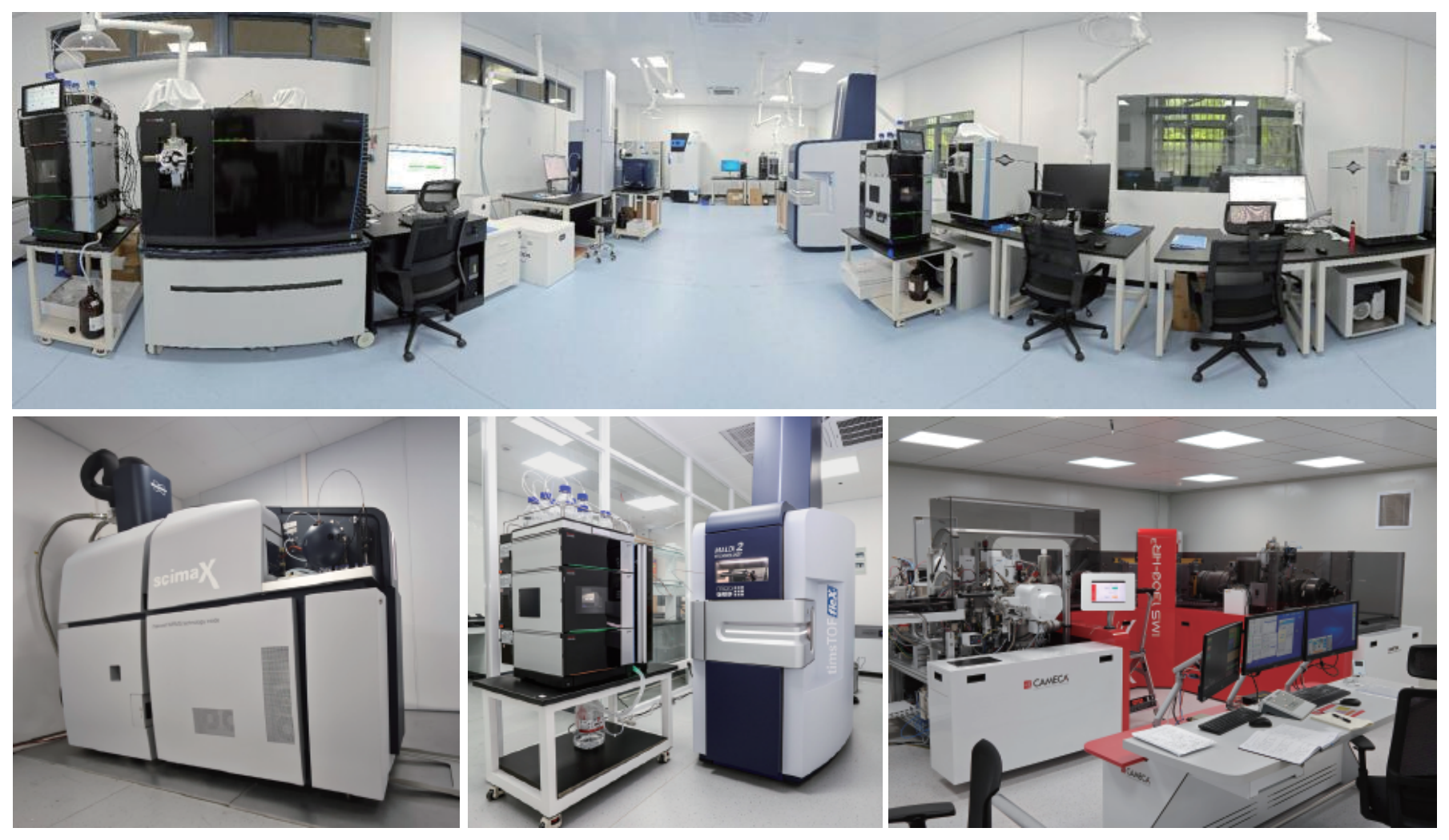
    To date, CATMS has assembled a diverse collection of high end mass spectrometry instruments, including but not limited to: 


    Prosperity of Mass Spectrometry in Research Institutions and Industry: As a pioneering center for mass spectrometry development in China, Hangzhou has witnessed significant advancements in science, technology, and higher education in recent years. The city now hosts 29 universities, over 100 research institutions, more than 1,000 biotechnology corporations, and over 10 mass spectrometry testing and manufacturing companies. Beyond Zhejiang University, other local institutions such as Westlake University and Zhejiang University of Technology have also established state of the art mass spectrometry shared facilities. The demand for mass spectrometry extends beyond academic universities, reaching the biotech industry as well as ecological, environmental, agricultural, food, and drug regulatory agencies. This expansive user base has spurred the growth of numerous commercial analytical testing service laboratories and domestic instrument companies. 

    With the growing mass spectrometry community in Hangzhou and across China, the city recently welcomed over 3,000 attendees at the 2023 CMSS mass spectrometry conference. From 2015 to 2023, the Chinese Mass Spectrometry Conference has seen a steady increase in scholarly participation, reflecting the vibrant and thriving landscape of Chinese mass spectrometry society.
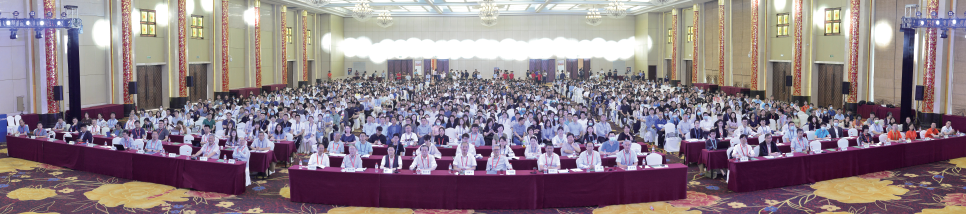

2023 CMSC in Hangzhou, more than 3000 participants


Hello, I am your AI conference assistant! You can try to arrange the following tasks:
To facilitate your participation, you may require the following services:
{{item.question}}

{{ai_type_list[item.type_index]?.name}}

Are you satisfied: Yes No
In deep thought
{{ 'en' == 'cn' ? ai_type_list[ai_type_index]?.name : ai_type_list[ai_type_index]?.name_en }}

{{ 'en' == 'cn' ? item.name : item.name_en }}

{{ 'en' == 'cn' ? item.desc : item.desc_en }}

send